Food Security, Decoded: Why Full Shelves Don’t Mean Full Stomachs
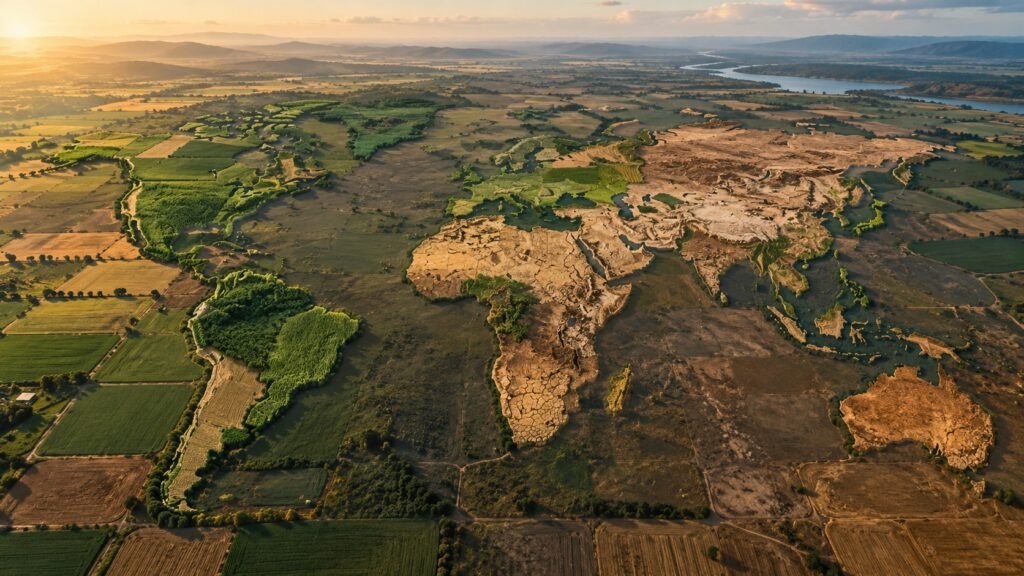
Food security means having reliable physical and economic access to enough safe, nutritious food for an active, healthy life. It rests on four pillars: availability, access, utilization, and stability. When one or more of those conditions breaks down, people slide into food insecurity, a spectrum that runs from mild worry about the next grocery bill all the way to famine.
That definition sounds simple. The mechanics behind it are not. A country can grow a surplus and still have hungry citizens. A family can live twenty minutes from a full supermarket and still skip meals. Food security is less about how much food exists on the planet and more about whether the right food reaches the right people, reliably, over time. This guide breaks down what the term actually means, how experts measure it, what pushes people into food insecurity, and what resilience looks like at the national and household level.
What Food Security Really Means
The working definition most institutions use comes from the 1996 World Food Summit. Food security exists when all people, at all times, have physical, social, and economic access to sufficient, safe, and nutritious food that meets their dietary needs and food preferences for an active and healthy life.
Every clause in that sentence is doing work. “All people” rules out national averages that hide pockets of hunger. “At all times” builds in the expectation of stability, not just a good harvest year. “Physical, social, and economic access” acknowledges that food can be present and still out of reach. “Dietary needs and food preferences” moves the bar past raw calories toward nutrition and cultural fit.
The simple version
Strip away the policy language and it comes down to this: a household is food secure when its members can consistently get enough affordable, safe, nutritious food without giving up other essentials like rent, medicine, or heat. The moment food starts competing with those other survival costs, security is already eroding.
Food security versus food insecurity
Food insecurity is not a synonym for starvation. It is a range. At the mild end, a household worries about running out of food and stretches the budget with cheaper, less nutritious options. In the middle, people reduce the quality and variety of what they eat. At the severe end, they cut portion sizes, skip meals, and eventually go whole days without eating. Hunger is a possible outcome of food insecurity, not the definition of it. Most food insecurity never makes the news precisely because it looks like quiet trade-offs rather than crisis.
The Four Pillars of Food Security
The four-pillar framework has been the working standard since the 2007 to 2008 global food price crisis put it front and center. Think of the pillars as a sequence with a cross-cutting fourth element: food has to exist, people have to be able to obtain it, the body has to be able to use it, and all three conditions have to hold steady over time.
1. Availability: is there enough food?
Availability is the supply side. It covers domestic agricultural production, livestock and fisheries, food reserves and storage, imports, and the transportation networks that physically move food from where it is grown to where it is eaten. A region has strong availability when enough food is physically present, whether grown locally or brought in from outside.
Availability is necessary but never sufficient on its own. A port city can be stacked with imported grain while households two miles inland cannot afford a loaf of bread. Supply answers only the first question.
2. Access: can people actually get it?
Access is the demand side, and it is where most food insecurity actually lives. It depends on income, food prices, functioning markets, transportation, and physical proximity to where food is sold. This is the pillar that explains the paradox at the top of this article: national food supply can look healthy on paper while individual households remain food insecure because they lack the money or the means to obtain what is available.
The economist Amartya Sen made this point decades ago by showing that major famines have occurred even when food was physically available. People starved not because the food was gone but because they had lost the ability to command it, through collapsed wages, spiking prices, or lost work. Access, not raw supply, is usually the pressure point.
3. Utilization: can the body use the food?
Utilization moves from the household to the individual body. Having food is not the same as being nourished by it. This pillar covers nutritional quality, dietary diversity, food safety, clean water, sanitation, and the health conditions that determine whether the body can absorb nutrients. A diet heavy in cheap calories but thin on nutrients can leave a person technically fed and still malnourished. Contaminated water or untreated illness can waste the nutrition in an otherwise adequate diet.
This is the pillar that separates food security from simple calorie counting. Enough energy to survive is a low bar. Enough nutrition to be healthy is the real target.
4. Stability: will access hold tomorrow?
Stability is the time dimension, and it cuts across the other three. A household is not truly food secure if this month’s access could vanish next month. Stability is threatened by seasonal shortages, crop failures, job loss, inflation, conflict, natural disasters, and supply chain disruption. A good year followed by a lost harvest is not food security. It is a temporary reprieve.
Beyond four: agency and sustainability
The four pillars are the canon, but the concept keeps evolving. Researchers and FAO bodies increasingly recognize two further dimensions. Agency is the capacity of people to make their own decisions about what they eat and how their food is produced and distributed. Sustainability is about protecting the ecological and economic foundations that generate food security for future generations, so that meeting today’s needs does not undercut tomorrow’s. Where stability handles short-term shocks, sustainability handles the long horizon. Most older explainers skip these entirely, which is exactly why they are worth knowing.
Food Security and Food Insecurity: A Side-by-Side Look
Abstractions get clearer when you put them next to real situations. The same event can register very differently depending on which level you look at.
| Level | Food secure | Food insecure |
|---|---|---|
| Household | Stable income covers dependable, nutritious groceries | Skipping meals because groceries compete with rent |
| Community | Reliable markets and open transport routes | A flood cuts off the only road to the nearest market |
| National | Resilient mix of production, reserves, and imports | Conflict disrupts harvests and severs supply chains |
The table also shows why interventions have to match the level. Sending food aid to a country that already has supply but broken distribution solves the wrong problem. Diagnosis before treatment.
What Causes Food Insecurity?
Food insecurity rarely traces back to a single cause. It usually emerges where several pressures compound, one shock exposing a weakness that another shock then deepens.
- Poverty and low income. The most consistent driver. When money is tight, food is often the most elastic line in the budget, the thing that gets cut first because it can be.
- High food prices and inflation. Rising prices shrink what a fixed income can buy. Food price spikes hit low-income households hardest because food eats a larger share of their spending.
- Conflict and displacement. War disrupts planting and harvest, destroys infrastructure, and forces people from the land and markets they depend on. It is one of the most severe and persistent drivers globally.
- Climate change and extreme weather. Droughts, floods, and shifting growing seasons cut yields and destroy stored food. Climate pressure increasingly compounds every other driver on this list.
- Crop failure and livestock loss. A single bad season can wipe out a smallholder family’s income and food supply at the same time.
- Supply chain and transport disruption. Food that cannot move is food that cannot be eaten. Broken roads, fuel shortages, and logistics breakdowns strand supply away from demand.
- Weak infrastructure and storage. Without adequate storage, refrigeration, and processing, a large share of food spoils before it reaches anyone. Post-harvest loss is a quiet but massive drain.
- Poor health, water, and sanitation. These undercut utilization, turning adequate food into inadequate nutrition.
The lesson underneath all of these: resilient food systems fail gracefully, absorbing one shock without collapsing. Fragile ones fail all at once because the shocks stack.
What Threatens Global Food Security
Zoom out from the household and the same drivers reappear as system-level pressure points. The strong way to understand global food security is as a risk map, not a doom forecast.
- Armed conflict and geopolitical instability
- Extreme weather and long-term climate shift
- Water scarcity and competition for fresh water
- Volatile prices for fuel, fertilizer, and other farm inputs
- Trade restrictions and export bans that fragment supply
- Degradation of arable land and loss of soil health
- Transportation and logistics fragility
- Population displacement that severs people from their food sources
None of these operates in isolation. A fertilizer price spike lowers yields, which tightens supply, which raises food prices, which deepens poverty, which reduces access. Systems risk is about those chains, not any single link.
How Food Security Is Measured
Measurement is where a lot of general explainers go thin, and it is where a serious treatment earns its authority. You cannot manage what you cannot measure, and food security has several established measurement tools, each answering a different question.
Food Insecurity Experience Scale (FIES)
FAO’s FIES estimates food insecurity from the direct experience of the people living it. It uses a short set of experience-based questions, asking whether, over a given period, a person worried about running out of food, skipped meals, or went a day without eating because of a lack of money or resources. The pattern of answers places households along the mild-to-severe spectrum. Its strength is that it captures lived reality rather than inferring it from supply statistics.
Prevalence of Undernourishment
This is a population-level estimate of how many people are not getting enough dietary energy to meet basic needs. It works at the scale of countries and regions rather than individual households, and it is one of the headline indicators used to track hunger over time.
Integrated Food Security Phase Classification (IPC)
The IPC is the framework used to classify the severity of acute food crises, running through escalating phases up to famine. It exists to give governments and humanitarian agencies a common language for deciding where the need is most urgent and how to triage a response. When you see a region formally described as approaching famine conditions, that language usually traces back to IPC classification.
Household consumption and expenditure surveys
National statistics offices run these surveys to track what households actually buy and eat, and how much of their budget food consumes. They are a workhorse source for understanding food access at the domestic level and for spotting which groups are most exposed.
Cost and affordability of a healthy diet
A newer angle in measurement asks not just whether people get enough calories but whether a genuinely healthy diet is financially within reach. This reframes the question around nutrition and affordability together, which is closer to what food security actually promises.
Clearing Up the Confusion: Related Terms
“Food security” gets tangled with several neighboring terms, and some of them mean genuinely different things. Sorting them out is one of the fastest ways to sound like you actually understand the field.
Food security versus food safety
Food security is about reliable access to enough nutritious food. Food safety is about whether that food will make you sick, covering contamination, pathogens, and safe handling. A meal can be secure but unsafe, or safe but insufficient. Different problems, different agencies, different fixes.
Food security versus nutrition security
Food security can be satisfied by adequate calories. Nutrition security raises the bar to diets that actually support health, with the right mix of nutrients, not just enough energy to get through the day. Nutrition security is food security with the utilization pillar taken seriously.
Food security versus food sovereignty
Food security is about outcomes: do people have reliable access to adequate food. Food sovereignty is about control: who gets to decide how food is produced, distributed, and traded, and whether communities can shape their own food systems rather than depend on outside supply. The two can align, but they answer different questions.
Food security versus food defense
This one causes real confusion because some official pages use “food security” to mean protecting the food supply from deliberate harm. That concept is more precisely called food defense: guarding against intentional contamination, tampering, sabotage, or attacks on the food system. It is a security-and-safety concern, distinct from the access-and-nutrition meaning that most of this article covers. If you land on a page talking about food security in terms of tampering and threats to the supply chain, that is food defense wearing the same words.
Agritech and the Food Security Equation
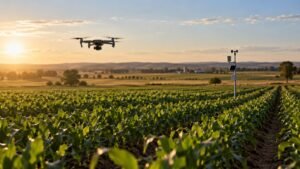
Technology is reshaping several of the pillars at once, which is why agritech comes up constantly in food security discussion. Precision agriculture helps farmers get more from the same land and inputs. Drought-resistant crop varieties protect availability against a shifting climate. Better irrigation and water management stretch scarce water further. Sensors and crop monitoring catch problems earlier. Improved storage and cold chains attack post-harvest loss directly, keeping more of what gets grown edible. And food security monitoring platforms combine agricultural, economic, and climate data into early-warning systems that let authorities act before a shortage becomes a crisis.
Agritech is a lever, not a cure. Producing more food does not automatically fix insecurity if the problem is access, affordability, or distribution. But applied to the right pillar, it can move real numbers.
How Food Security Can Be Improved
Solutions work best when organized by which part of the system they strengthen, rather than dumped as a generic wish list.
- Boost resilient production. Invest in agriculture that can withstand climate stress, not just maximize output in a good year.
- Fix storage and cold chains. Cutting post-harvest loss is often cheaper than growing more, and it protects availability directly.
- Strengthen transport and supply chains. Food that can move reliably is food that stays accessible when a shock hits.
- Reduce food loss and waste. Every stage from farm to shelf leaks edible food. Plugging those leaks improves availability without a single extra acre.
- Make nutritious food affordable. Access is the pillar that fails most often, and affordability is its lever.
- Support farmers’ access to inputs. Seeds, fertilizer, water, and credit determine whether smallholders can produce at all.
- Build social protection. Cash transfers, food assistance, and safety-net programs catch households before they fall into severe insecurity.
- Invest in early-warning systems. Monitoring and data let responders act ahead of a crisis instead of after it.
Household Food Security: What It Means at Home
Most of this article operates at the level of nations and systems, but food security also has a kitchen-table version. Household resilience follows the same logic as the national picture, scaled down: keep more than one supply line, and do not let a single disruption empty the shelves.
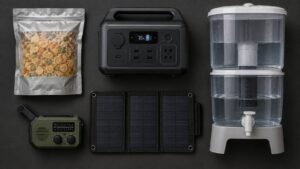
In practice, that looks like keeping a practical reserve of shelf-stable food, rotating it so nothing expires unused, protecting a clean water supply, maintaining more than one way to prepare food if the power goes out, and stocking nutritionally sensible staples rather than just calories. Households with specific dietary or medical needs plan for those in advance, since those are the supplies hardest to improvise in a disruption. The underlying principle is the one that runs through the whole field: redundancy beats dependence on a single point of failure.
There is a sizable consumer industry built around this, selling long-shelf-life emergency food kits, freeze-dried supplies, and water filtration to households that want a buffer. Companies like 4Patriots, My Patriot Supply, ReadyWise, and Wise Food Storage all operate in this space. Whether a packaged kit or a slowly built pantry of ordinary groceries makes more sense depends on budget, storage space, and how much a household values convenience over cost. The point worth keeping in view is the principle, not the product: a dependable buffer and more than one way to feed yourself. The kit is one way to get there, not the only one.
Common Misconceptions About Food Security
A few stubborn myths make this topic harder to reason about than it needs to be.
- “If the supermarkets are full, everyone is food secure.” False. Full shelves speak to availability. Whether people can afford and reach that food is a separate question, and it is the one that fails more often.
- “Food security just means having enough calories.” False. Nutrition, food safety, and the body’s ability to use the food all matter. Calories are the floor, not the whole building.
- “A country that grows enough food can’t have hunger.” False. National supply can be strong while distribution, prices, and access leave individual households behind.
- “Food insecurity always means famine.” False. It runs across a spectrum, and most of it looks like quiet budget trade-offs, not crisis.
- “Just grow more food and the problem is solved.” Not necessarily. If the bottleneck is access, affordability, storage, or distribution, extra production alone will not reach the people who need it.
Frequently Asked Questions About Food Security
What is food security in simple terms?
It is the ability to reliably get enough safe, nutritious food for an active, healthy life without having to sacrifice other essentials to do it. When food starts competing with rent or medicine, security is already slipping.
What are the four pillars of food security?
Availability, access, utilization, and stability. Food has to exist, people have to be able to obtain it, the body has to be able to use it, and all three have to hold steady over time.
What is an example of food security?
A household with a stable income that can consistently buy varied, nutritious groceries, live near functioning markets, and keep doing so month after month is food secure. The reverse, skipping meals because food competes with other bills, is food insecurity.
What causes food insecurity?
Poverty, high prices, conflict, climate and extreme weather, crop failure, supply chain disruption, weak infrastructure, and poor health or sanitation. These usually compound rather than act alone.
What is global food security?
The same concept applied at the scale of the whole world: whether people everywhere have reliable access to enough nutritious food, and how conflict, climate, prices, and trade affect that across regions.
Why is food security important?
Because it underpins health, child development, economic productivity, and social stability. Sustained food insecurity damages all of them, and the effects on children can last a lifetime.
How does climate change affect food security?
It threatens availability through droughts, floods, and shifting growing seasons, and it destabilizes the stability pillar by making shocks more frequent and severe. It tends to compound every other driver.
What is the difference between food security and food safety?
Food security is about reliable access to enough nutritious food. Food safety is about whether food is free from contamination and safe to eat. A meal can be one without the other.
How is food security measured?
Through tools like the Food Insecurity Experience Scale, the prevalence of undernourishment, the Integrated Food Security Phase Classification for acute crises, national consumption surveys, and measures of how affordable a healthy diet is.
The Hard Baseline
Availability alone was never the finish line. Genuine food security requires all four conditions at once: food that is available, accessible, nutritious and usable, and dependable over time. Miss any one of them and the whole thing wobbles, which is why a country can post a surplus and still leave families skipping meals.
The through-line, from a national supply chain down to a kitchen pantry, is the same. A resilient food system keeps working when one part is under stress, because it does not depend on any single link holding. Production, transport, affordability, storage, and access each carry part of the load, and the systems that stay secure are the ones built to absorb a shock in one place without failing everywhere else.